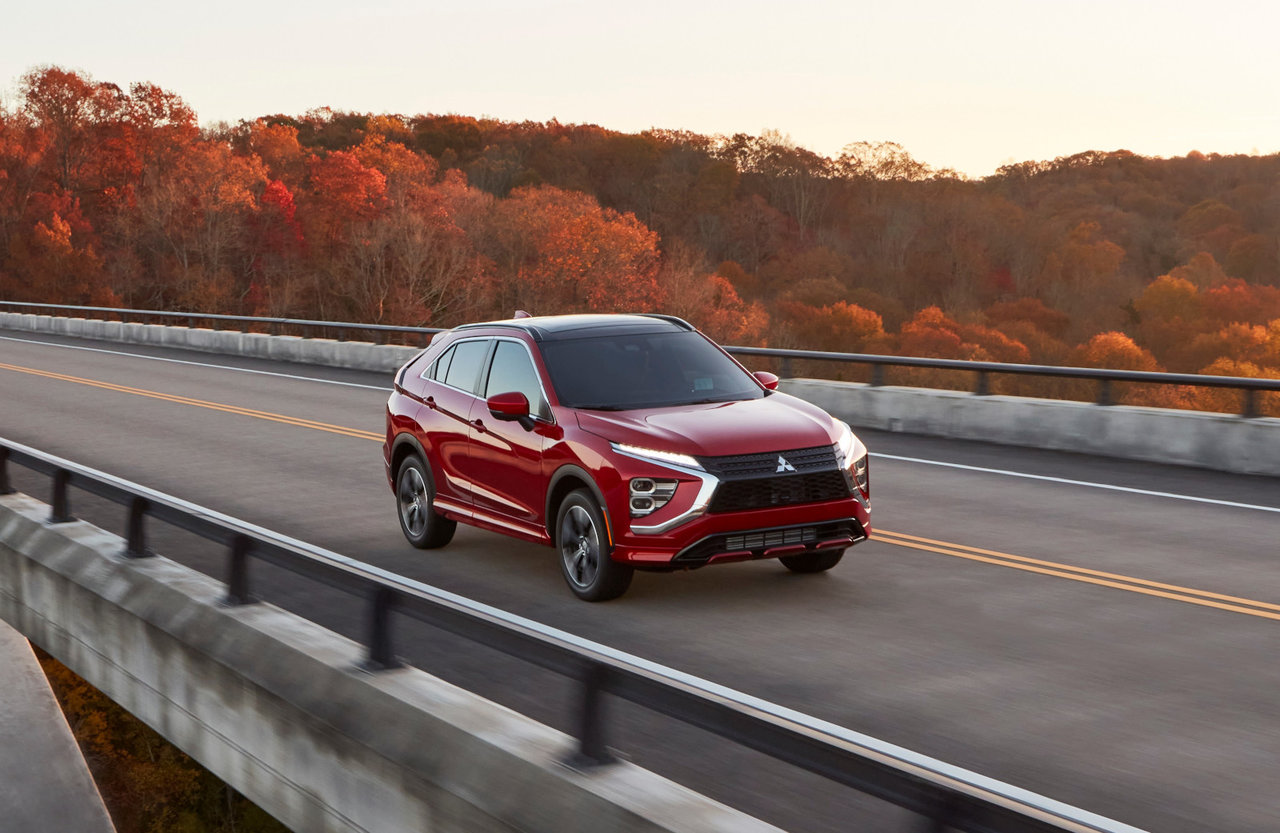
Merging onto the highway near a busy interchange, backing out of a packed lot, or driving home after a long shift, most Nova Scotia drivers rely on more than mirrors and instinct to stay aware. The 2026 Eclipse Cross bundles several driver-assist systems designed to support exactly those moments.
This guide walks through five of them in plain language: what each one does, how it works, and where it actually helps on the roads around Nova Scotia.
What These Systems Actually Do
The 2026 Eclipse Cross is built on a safety foundation that includes Active Stability Control, Traction Control Logic, seven airbags including a driver’s knee airbag, and Reinforced Impact Safety Evolution (RISE) body construction. Those systems work in the background on every trim.
Layered on top are five driver-assist technologies: Forward Collision Mitigation, Blind Spot Warning, Rear Cross Traffic Alert, Adaptive Cruise Control, and Lane Departure Warning. Each one watches a different part of the driving picture, and none of them replace attentive driving. They are support, not a substitute for it.
How Each System Works
Forward Collision Mitigation watches the road ahead. If it detects a risk of impact with a vehicle or pedestrian, it sounds a warning and can automatically slow the vehicle down.
Blind Spot Warning monitors the lanes beside the vehicle and alerts the driver when another vehicle sits in the space a mirror check might miss, particularly useful during a lane change.
Rear Cross Traffic Alert detects a vehicle approaching from the side while backing up. It flashes warning lights on both side mirrors, sounds a cabin buzzer, and shows a message in the instrument cluster. It works alongside the rearview camera rather than replacing it; the camera shows what’s directly behind, while Rear Cross Traffic Alert catches traffic approaching from either side.
Adaptive Cruise Control uses radar to hold a set following distance from the vehicle ahead, adjusting speed automatically as traffic slows or speeds up.
Lane Departure Warning alerts the driver when the vehicle begins drifting out of its lane without a signal. It alerts; it does not steer the vehicle back into place.
Why It Matters on Nova Scotia Roads

Rain, darkness, and tight parking are part of daily driving in this province, and each of these systems answers a specific version of that reality. Forward Collision Mitigation helps in stop-and-go traffic and in the unexpected slowdown that a distracted moment can miss entirely.
Blind Spot Warning earns its keep on multi-lane roads and during merges in heavier traffic, when a shoulder check alone can be rushed. Rear Cross Traffic Alert is most useful in busy parking lots, curbside spots, and any spot where a parked vehicle or wall blocks a clear view of what’s approaching.
Adaptive Cruise Control adds comfort on longer highway stretches, holding a following distance without constant pedal adjustments during a steady commute. Lane Departure Warning matters most on long drives or at the end of a shift, when attention can slip for a second without anyone noticing.
None of this replaces the broader safety structure built into the vehicle. Stability control, traction control, the airbag count, and the RISE body construction are what carry a driver through a situation these alert systems couldn’t prevent.
Who Benefits Most
New drivers get a second layer of feedback while they’re still building the habit of full mirror and shoulder checks. Daily commuters covering highway distance between Truro, Antigonish, and surrounding areas get the steady-speed comfort of Adaptive Cruise Control and the fatigue-related backup of Lane Departure Warning. Families doing regular grocery runs and school pickups get the parking-lot support of Rear Cross Traffic Alert.
Where Each Feature Shows Up on the 2026 Lineup
|
Feature |
ES |
SE |
GT |
NOIR |
|
Forward Collision Mitigation |
Standard |
Standard |
Standard |
Standard |
|
Blind Spot Warning |
N/A |
Standard |
Standard |
Standard |
|
Rear Cross Traffic Alert |
N/A |
Standard |
Standard |
Standard |
|
Lane Departure Warning |
N/A |
N/A |
Standard |
Standard |
|
Adaptive Cruise Control |
Standard cruise |
Standard cruise |
Adaptive |
Adaptive |
Forward Collision Mitigation carries across the lineup shown here. Blind Spot Warning and Rear Cross Traffic Alert step in from the SE trim up, while Lane Departure Warning and the radar-based Adaptive Cruise Control appear on GT and NOIR.
See These Systems on the 2026 Eclipse Cross
The 2026 Eclipse Cross pairs a standard safety foundation with driver-assist technology that scales up through the trim lineup, giving Nova Scotia drivers a clearer picture of the road in daily situations like merging, parking, and long commutes.
Visit Motor Hub Mitsubishi in Truro and Antigonish to walk through these systems in person and get behind the wheel of the 2026 Eclipse Cross for a test drive.